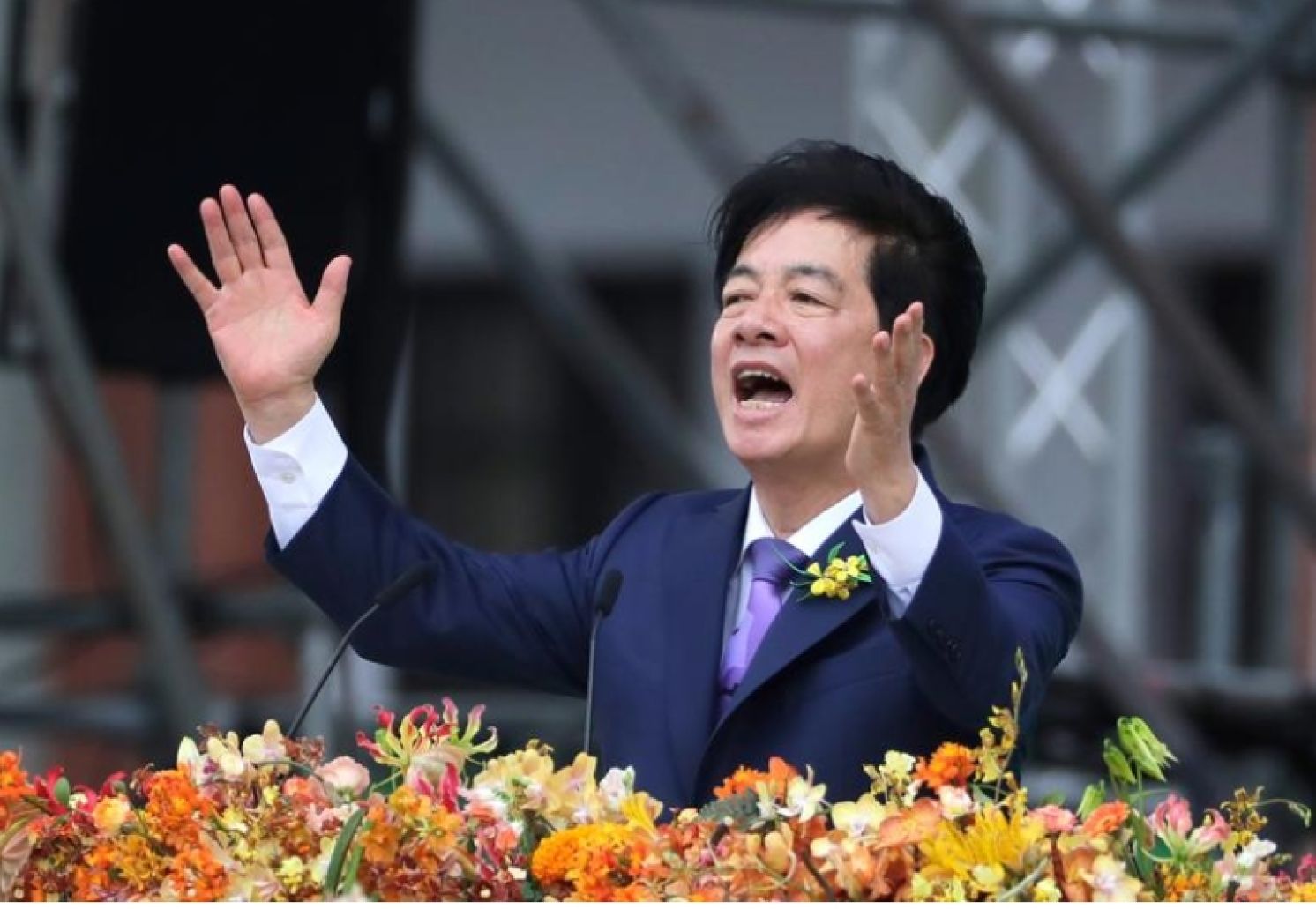
President Lai's Impeachment Unlikely to Pass But Remains Political Blemish
United Daily News Opinion, April 29, 2026
On May 19, a roll-call vote will be held on the impeachment motion against President Lai Ching-te. The date happens to fall on the eve of the second anniversary of his inauguration, making it particularly symbolic.
Despite holding fewer seats than the opposition in the Legislative Yuan, the Lai administration has repeatedly undermined the spirit of democratic rule of law. The minority has refused to yield to the majority, frequently using judicial power to interfere with the authority of the Legislative Yuan, which represents the will of the people, and issuing questionable interpretations. Nearly two years have passed with little achievement in national affairs. Government operations have often stalled amid reconsideration motions, petitions to the Constitutional Court, refusals to countersign, and failures to implement decisions—resulting in stagnation driven by power and money. The deadlock between ruling and opposition camps remains unresolved and has even worsened.
Therefore, the opposition has launched the impeachment to expose to the public the absurdities of President Lai’s governance and to let democratic nations around the world recognize that Taiwan has, since the lifting of martial law, its first popularly elected president facing an impeachment vote in the legislature. Although the impeachment is unlikely to pass, it will still leave an indelible stain on President Lai’s political career.
In the Legislative Yuan, the Kuomintang (KMT) holds 52 seats. Even when adding two independent legislators and eight from the Taiwan People’s Party (TPP), the total reaches only 62—short of the 76 votes required to pass the impeachment. The purpose of the impeachment is to allow democratic nations worldwide to judge the situation: when bills passed in the third reading by the legislature do not align with the Democratic Progressive Party’s (DPP) preferences, the Executive Yuan uses various means to “resist” the legislature. Such “fake democracy, real authoritarianism” political maneuvering is unmatched by any other party.
While mayor of Tainan, Mr. Lai refused to attend city council sessions for over 200 consecutive days, setting a precedent in local self-government history. He was referred by the Control Yuan in August of that same year to the Public Functionary Disciplinary Committee (now the Disciplinary Court) for review and was subsequently issued a reprimand. Now, as president, Mr. Lai still exhibits the same stubborn and inflexible character. Although this impeachment is unlikely to succeed, it should serve as a warning to the Lai administration.